Yonekawa Mizukaburi Festival
2026 Yonekawa Mizukaburi Festival
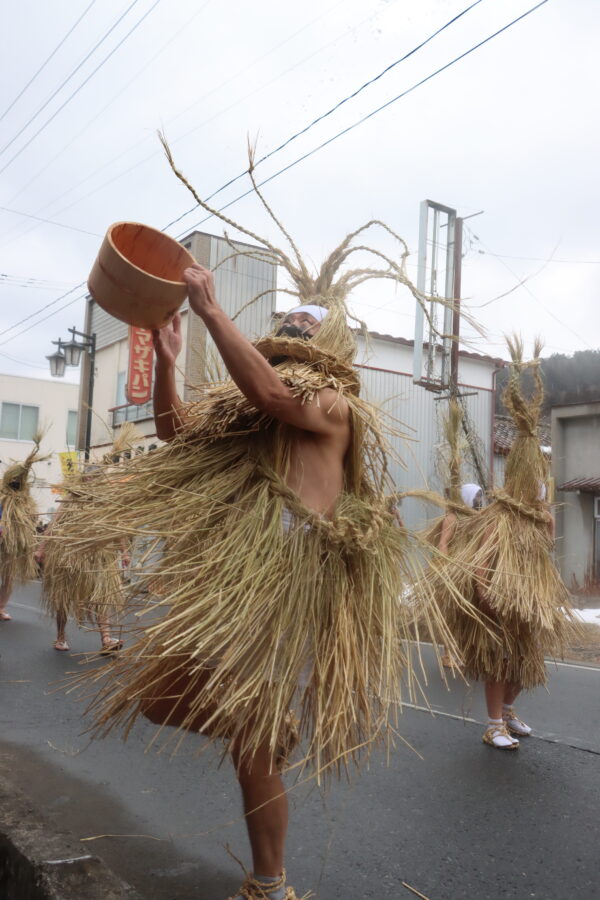
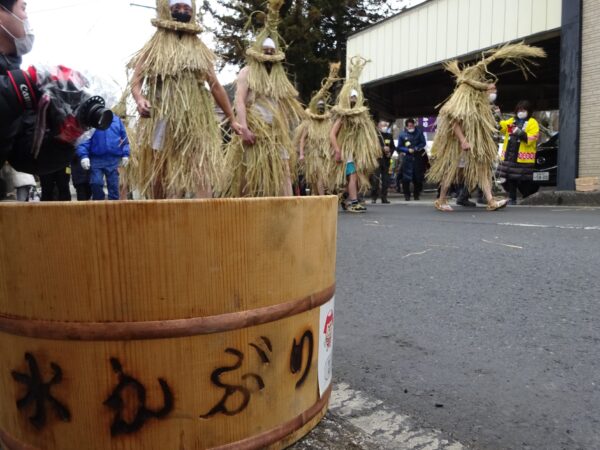
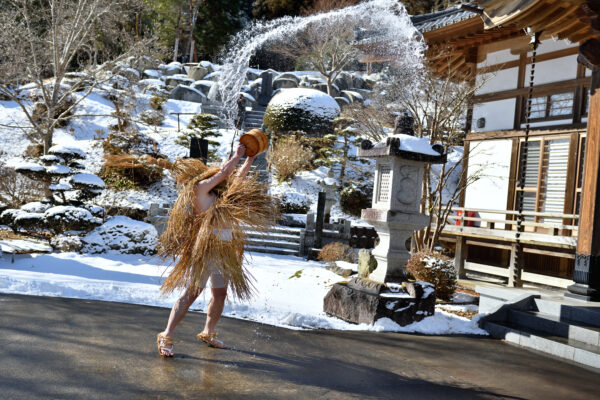
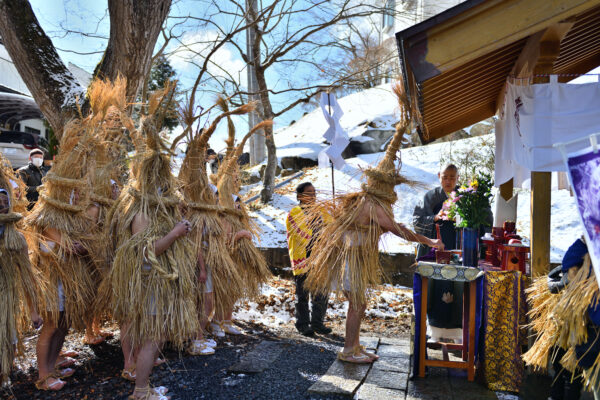
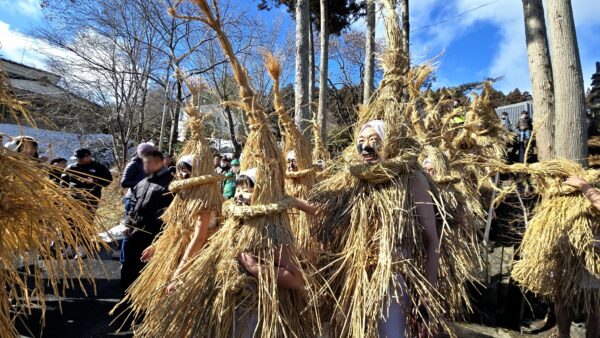
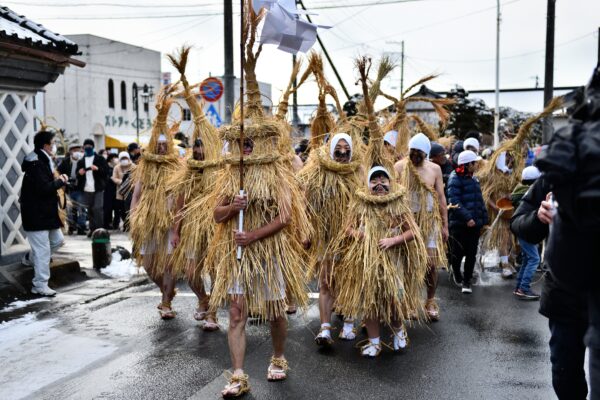
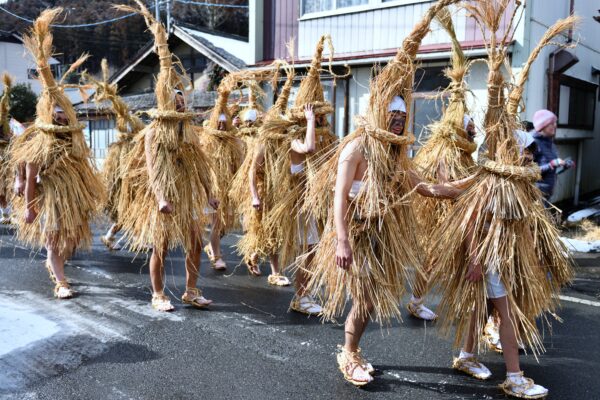
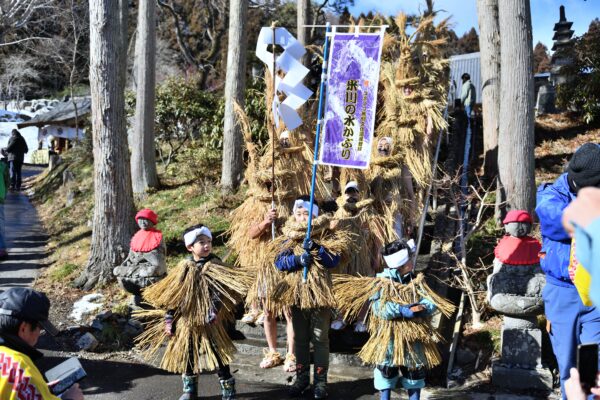
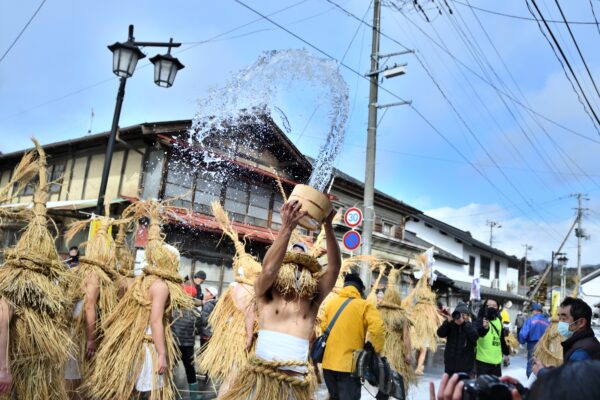
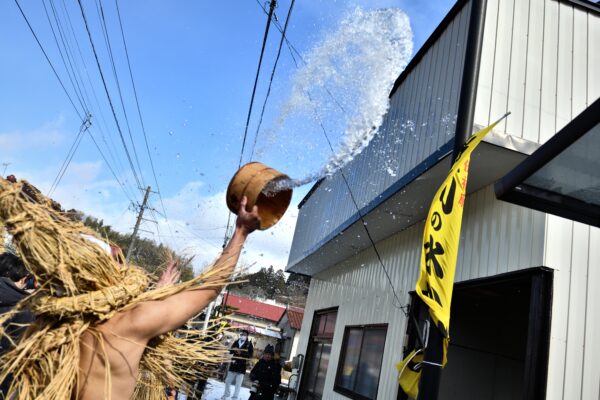
One of the most iconic cultural events in Northern Miyagi is the Yonekawa Mizukaburi Festival, held each year in February. “Mizukaburi” literally means “to be doused in water,” and is a fire-prevention tradition that has been passed down through generations. Each year, local men wrapped in bundles of straw move through the Yonekawa district, raising wordless cries as they splash buckets of water onto homes and buildings, praying for protection from fire.
Although the exact origins of the festival are unclear, records and oral tradition indicate that Mizukaburi has been practiced since at least the mid-Edo period. Remarkably, the ritual has continued without interruption, even during times of war and natural disaster. In recognition of its cultural value, the Yonekawa Mizukaburi Festival was designated a National Important Intangible Folk Cultural Property in 2000 and was registered in 2018 as a UNESCO Intangible Cultural Heritage under “Visiting Deities: Ritual Visits of Deities in Masks and Costumes.”
Held every February on Hatsu-uma, the first “horse” day of the month according to the traditional Japanese calendar, meaning that the precise date varies each year. On the morning of the event, starting around 8:00 am, local men gather at a residence known as the Mizukaburi Inn. There, participants prepare to become visiting deities—incarnations of the fire god. Senior members of the community construct the ritual straw garments, passing down techniques and knowledge to younger generations.
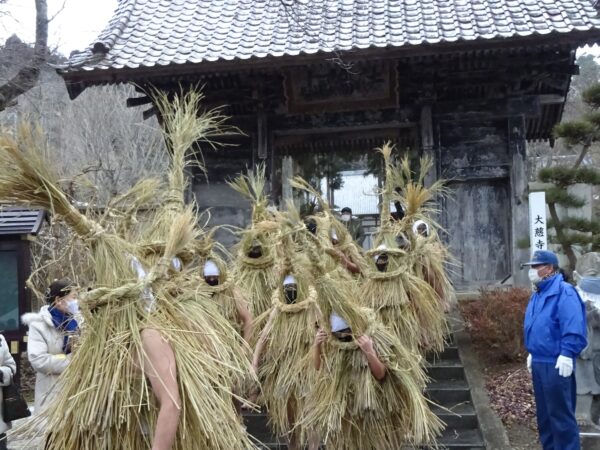
Participants wear white undergarments beneath layers of straw, their torsos wrapped with braided straw shimenawa ropes. Their faces are darkened with soot taken from the hearth, a mark of the fire deity, and each man wears a straw headpiece known as an atama, the shape of which differs by family and reflects individual craftsmanship. Among Japan’s visiting deity traditions, Mizukaburi is considered an older form, concealing human identity not with masks, but with soot.
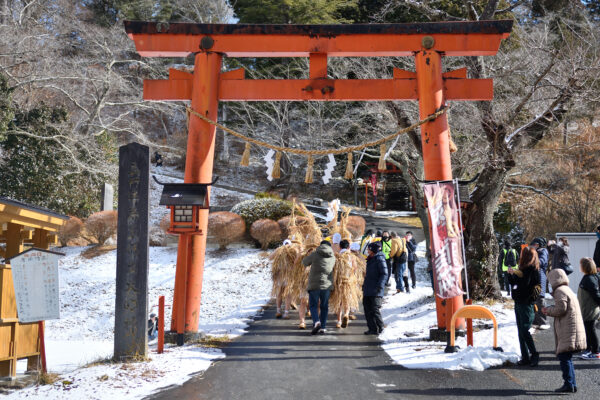
Around 10:00 a.m., a senior participant—often a man celebrating his 60th year—leads the procession from the Mizukaburi Inn to Daiji-ji Temple. There, the ceremony begins with water being poured onto the roof of the main hall. From this moment, the fire deities advance through the town, shouting “Whoo! Whoo!” as they splash water from buckets prepared by residents in front of their homes. Straw pulled from the deities’ costumes is placed on rooftops, where it serves as a fire-prevention talisman.
Following behind the main procession are two additional figures: Hyottoko, who rings a small bell, and Okame, who carries a bucket to receive offerings. Together, they are believed to bring good fortune as visiting deities.
Deeply tied to local identity, the Mizukaburi Festival is traditionally performed only by men of the community; it is said that fire will break out if outsiders attempt to take on the divine role. By borrowing the form of the gods, participants follow their ancestors in revering nature’s power, praying not to oppose it, but to be protected by it.
In an era of declining rural populations and fading cultural inheritance, festivals like Mizukaburi carry renewed importance. More than a ritual of fire protection, the Yonekawa Mizukaburi Festival unites generations in shared responsibility, preserving a living tradition that safeguards not only homes, but the cultural spirit of the community itself.
Details
- Date and Time
Sunday, February 1, 2026
10:30 am
- Location
Daiji-ji Temple Grounds
Machishimo-56 Tōwachō Yonekawa, Tome, Miyagi 987-0901
- Access
By Car:
Approximately 15 minutes from the Sanriku Expressway “Tome-Towa IC” exit
Approximately 40 minutes from the Tohoku Expressway “Wakayanagi-Kannari IC” exitBy Bullet Train:
Approximately 40 minutes by rental car or taxi from JR Tohoku Shinkansen “Kurikoma-Kogen Station”
By Train:
Approximately 30 minutes by rental car or taxi from JR Tohoku Main Line “Ishikoshi Station”